|
An Outstanding Horticultural Tour of Scotland
The HPS/MAG trip to Scotland in May 2026 was a plant lover’s dream!
After arriving in Edinburgh, our group of 23 enjoyed dinner at a local restaurant. The next morning we were off to our first destination, the Royal Botanic 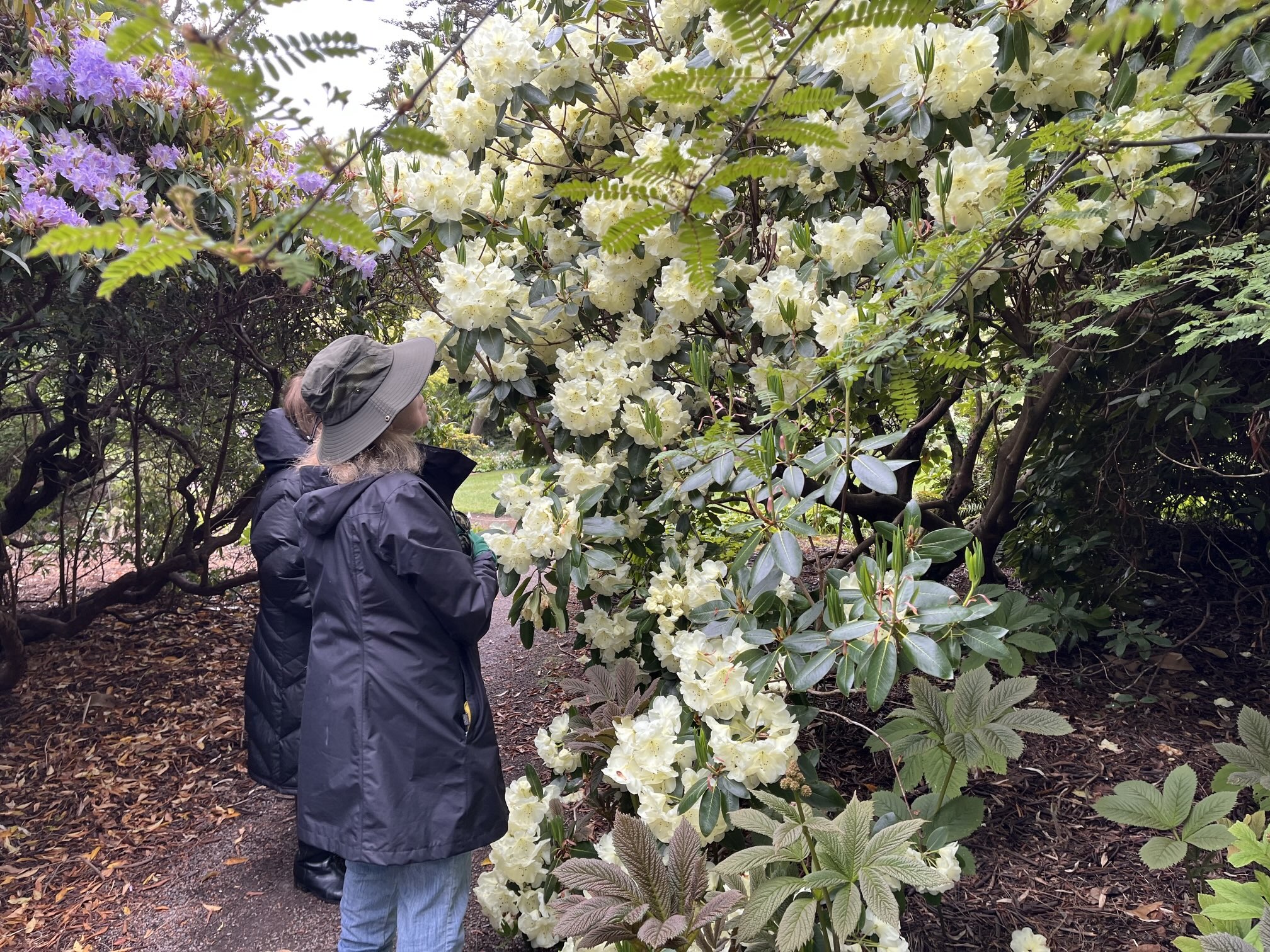 Garden, Edinburgh just a mile from the center of town. Our guide, Julia Cordon, had arranged for a special tour of the world famous Rock Garden and the dedicated tufa house, after which we wandered the grounds. Our group was particularly fascinated by the vertical tufa wall, which provided the perfect Garden, Edinburgh just a mile from the center of town. Our guide, Julia Cordon, had arranged for a special tour of the world famous Rock Garden and the dedicated tufa house, after which we wandered the grounds. Our group was particularly fascinated by the vertical tufa wall, which provided the perfect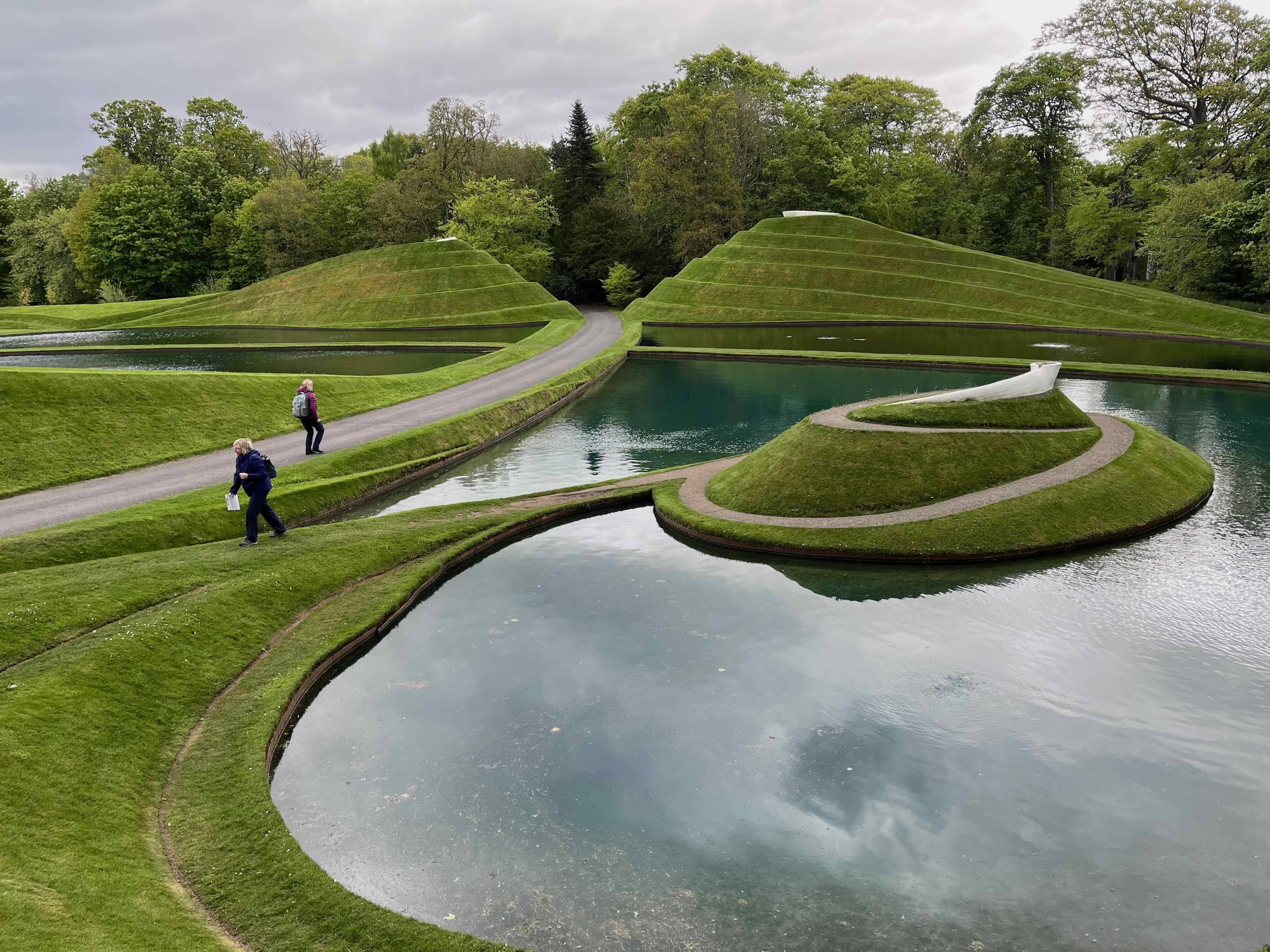 environment for cliff-dwellers such as Devil’s claw (Physoplexis comosa). environment for cliff-dwellers such as Devil’s claw (Physoplexis comosa).
Next in store was Jupiter Artland, a sculpture park featuring a spectacular collection of permanent works by international artists as well as temporary exhibitions. The experience was interactive and, at times, surprising. We descended into an amethyst grotto; walked the rims of a sculpted, rolling landscape titled Cells of Life; and strove to apprehend Extraction, a thoughtful exploration about how energy forms shape our culture. Chased out by a late afternoon storm, we returned to Edinburgh to enjoy dinner at restaurants of our choosing.
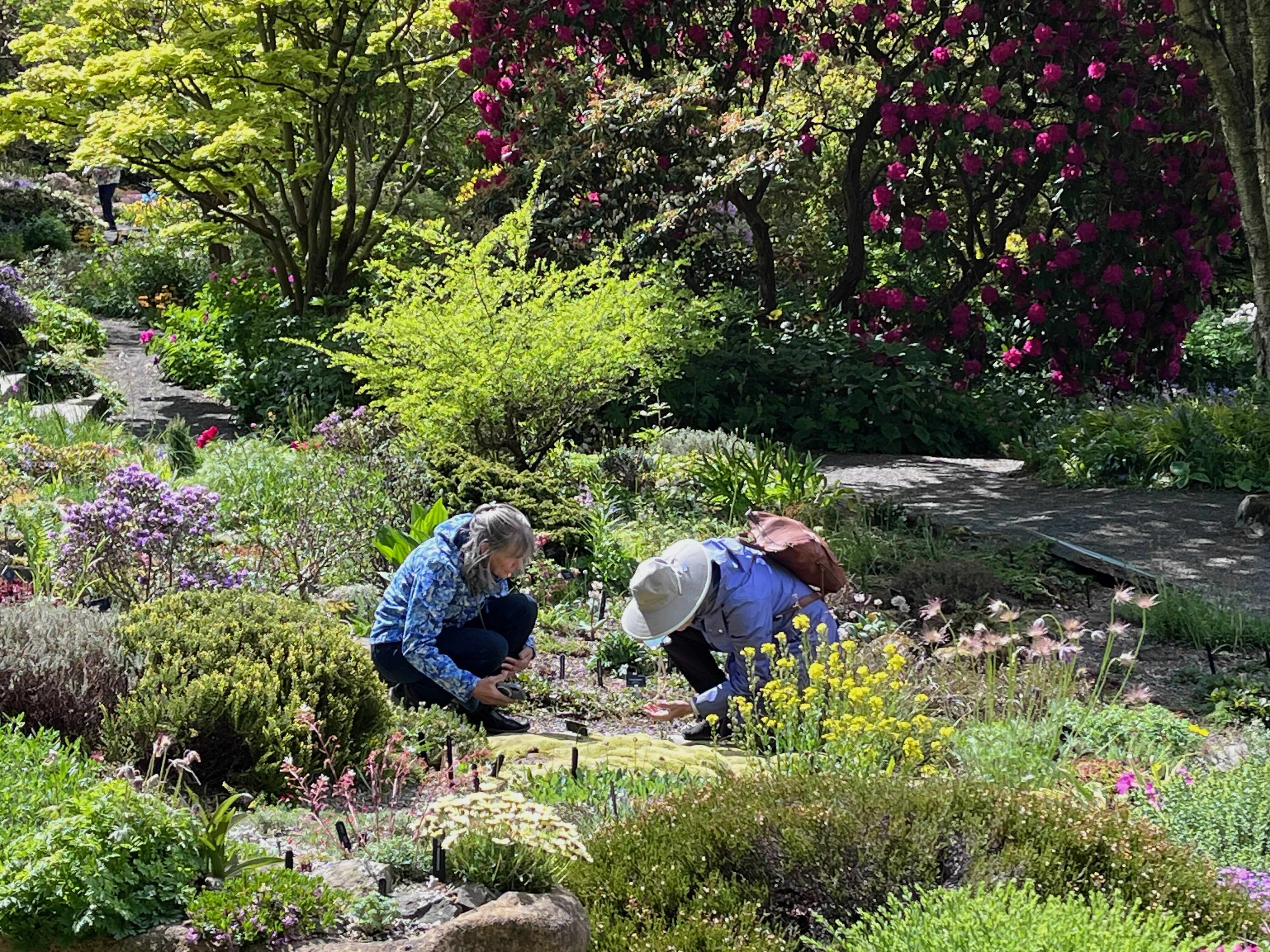
Branklyn Garden, a 2-acre hillside garden with paths winding along the contours and delights at every turn, is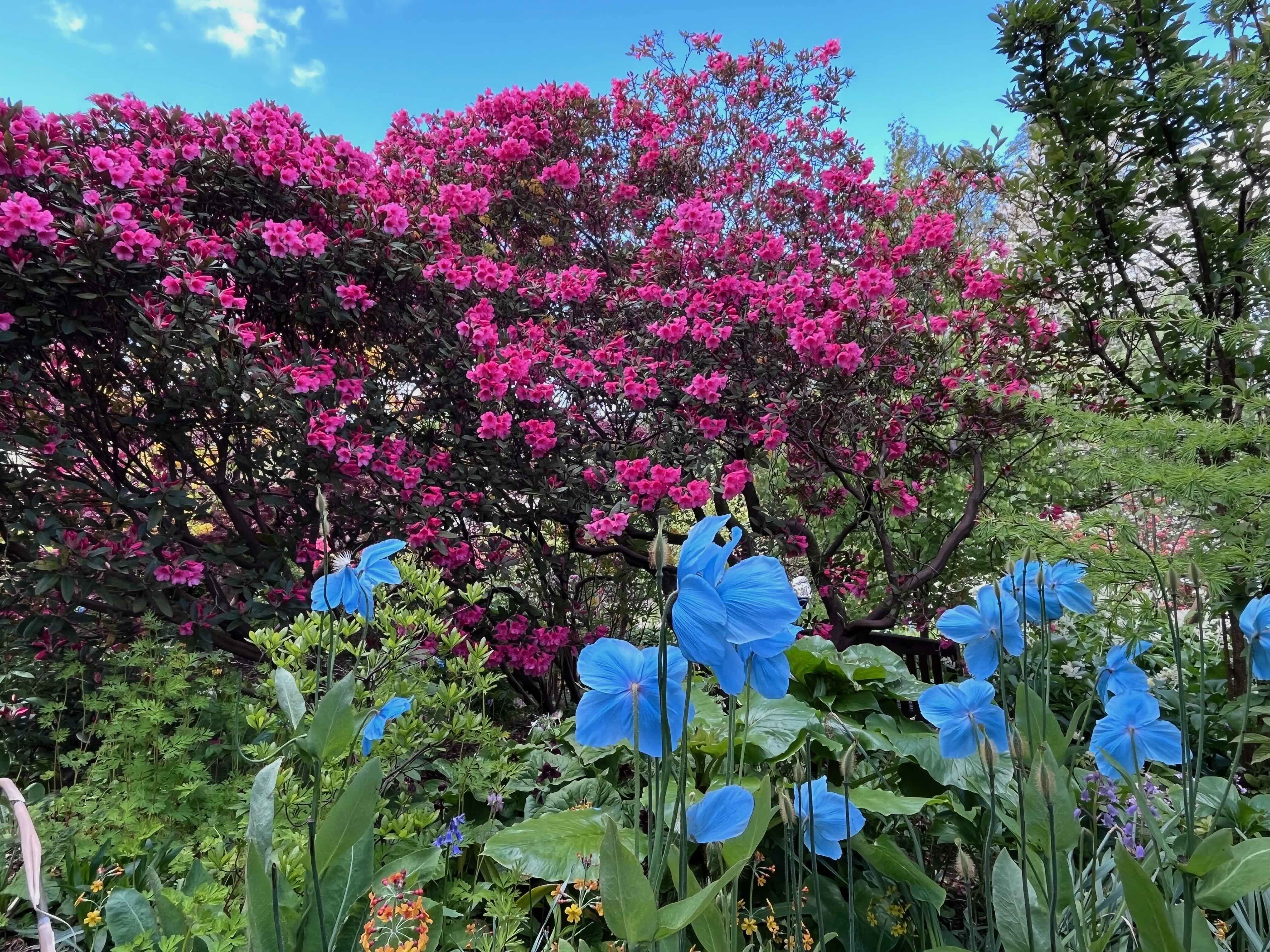 managed by the National Trust for Scotland. We saw Himalayan blue poppies (Meconopsis sp.), lady slipper orchids (Cypripedum sp.), trilliums, azaleas, and exquisite miniature rock garden flowers – and that was just the beginning! The Branklyn Garden Tearoom is known for its fresh baked scones, which, of course, we sampled. managed by the National Trust for Scotland. We saw Himalayan blue poppies (Meconopsis sp.), lady slipper orchids (Cypripedum sp.), trilliums, azaleas, and exquisite miniature rock garden flowers – and that was just the beginning! The Branklyn Garden Tearoom is known for its fresh baked scones, which, of course, we sampled.
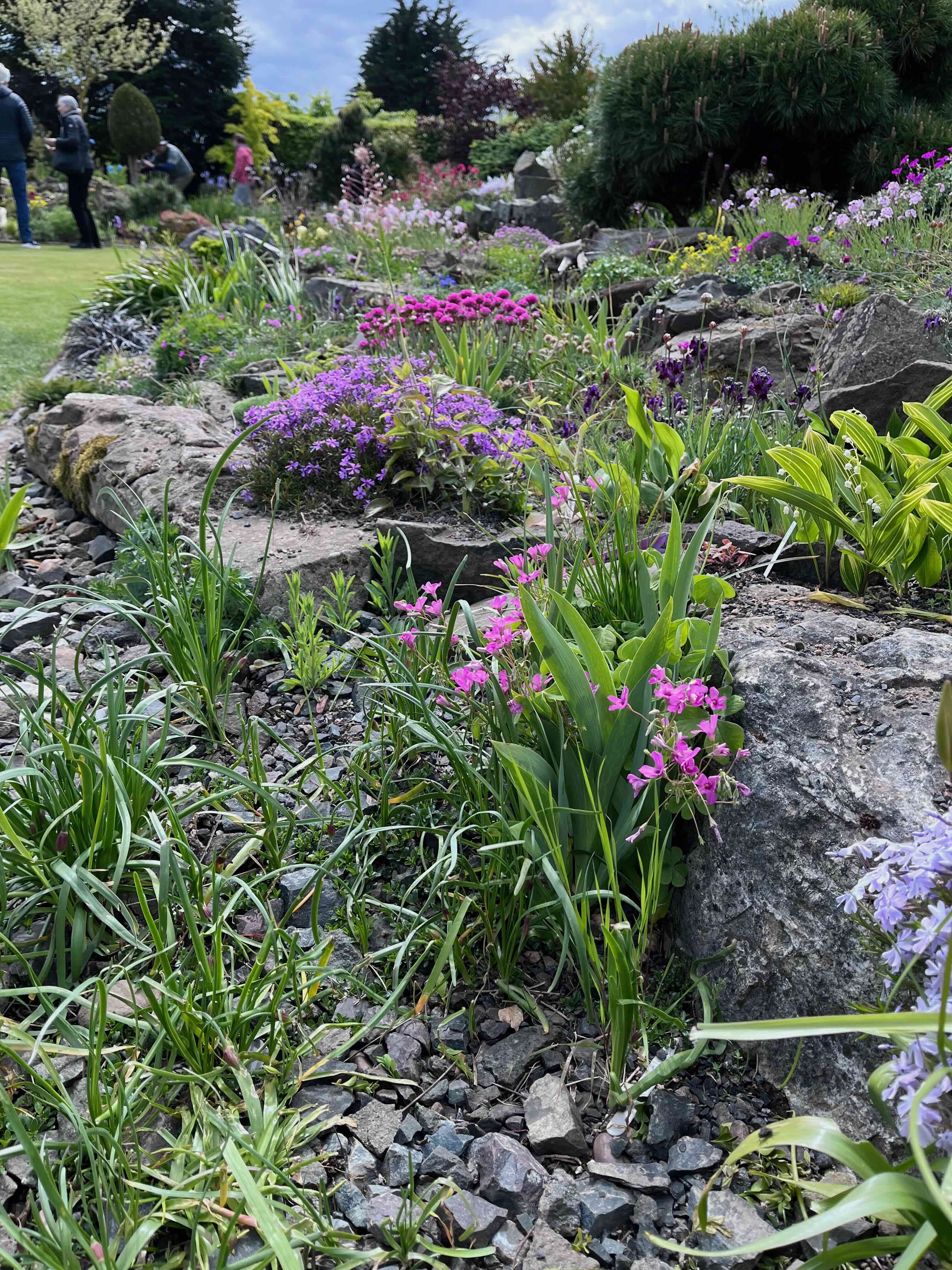 Lynbrook Garden, a private home garden was our next stop. Small, beautifully designed, and loaded with ideas for the rock gardeners among us, it was a wonderful visit, made even more so because the owner baked for us! This is customary, as we were beginning to learn. We ended the evening at McKays Hotel in Pitlochry, where we would spend the next three nights. Lynbrook Garden, a private home garden was our next stop. Small, beautifully designed, and loaded with ideas for the rock gardeners among us, it was a wonderful visit, made even more so because the owner baked for us! This is customary, as we were beginning to learn. We ended the evening at McKays Hotel in Pitlochry, where we would spend the next three nights.
The following morning we headed to Blair Castle and Gardens, the ancestral home of the Clan Murray. Our guide offered a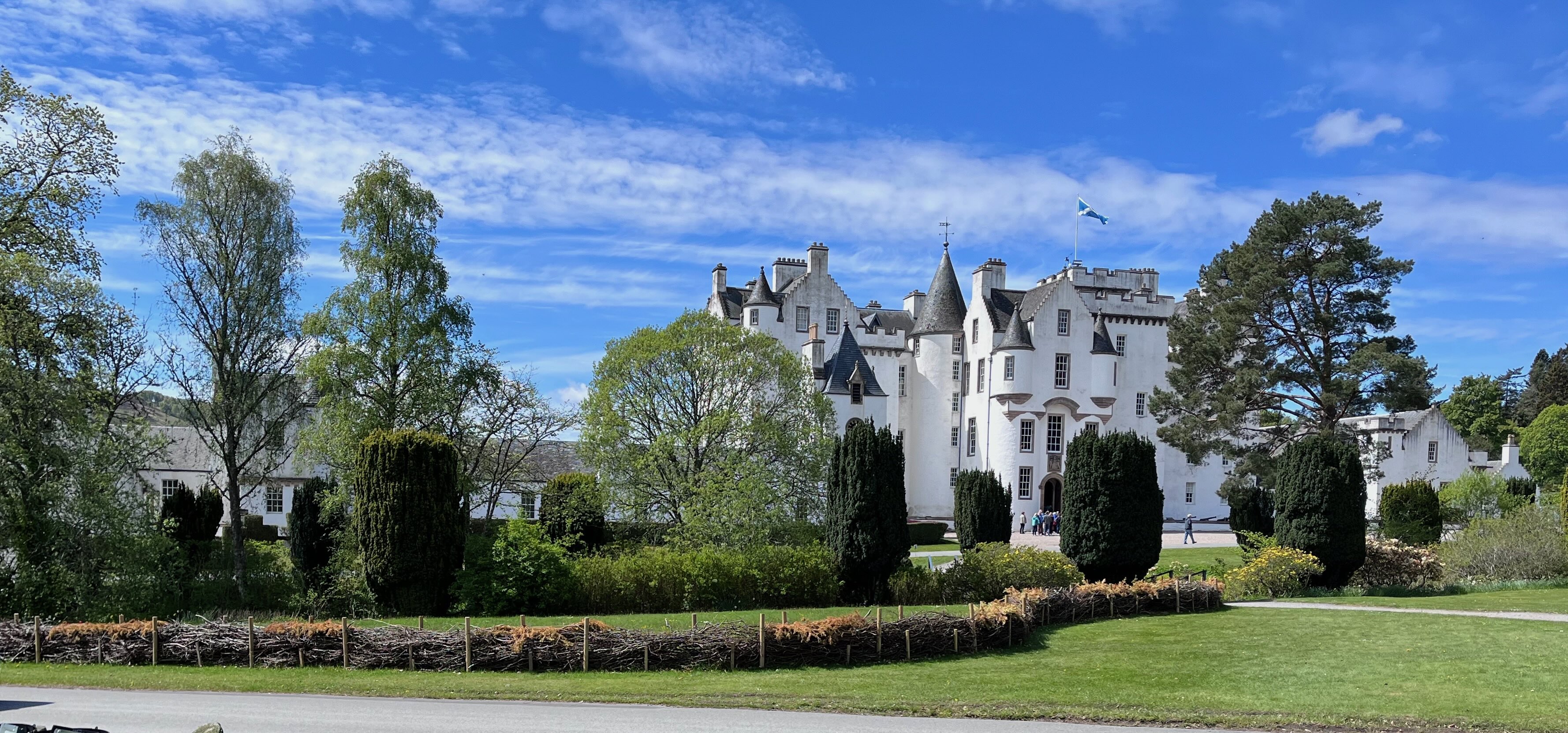 condensed version of the wars and occupations it had suffered over the millennia, and stories of the dignitaries that lived and visited there. After admiring the teacups, tapestries, and historical weaponry, we enjoyed the woodland paths and the 9-acre walled Hercules Garden. condensed version of the wars and occupations it had suffered over the millennia, and stories of the dignitaries that lived and visited there. After admiring the teacups, tapestries, and historical weaponry, we enjoyed the woodland paths and the 9-acre walled Hercules Garden.
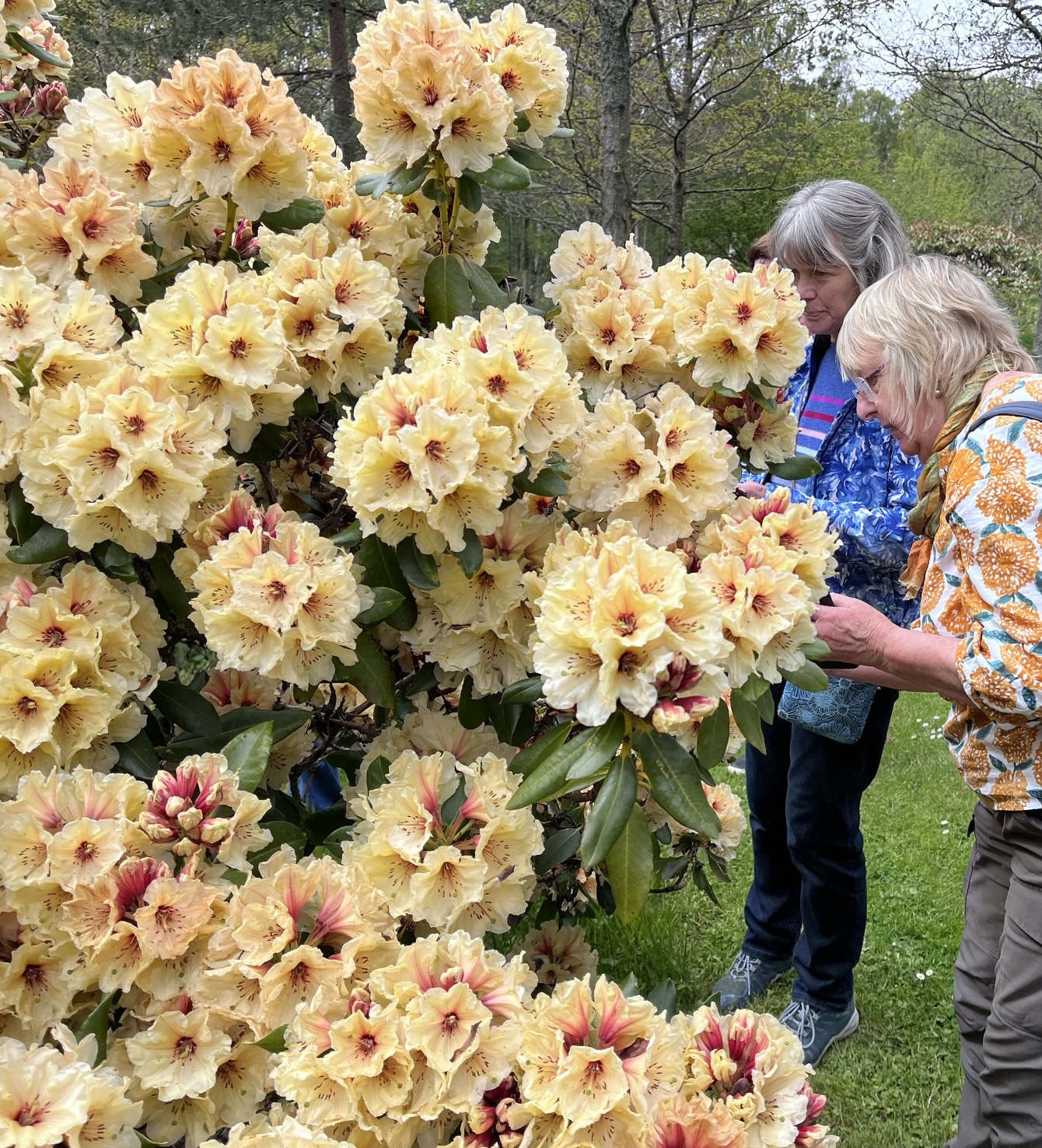
Craigowan, a 5-acre private garden with an extensive collection of rhododendrons was in peak bloom when we arrived there later that day. Ian Jones, the founder, had bought the property about 35 years ago and continues to add to the collection of roughly 1000 rhododendron species and hybrids.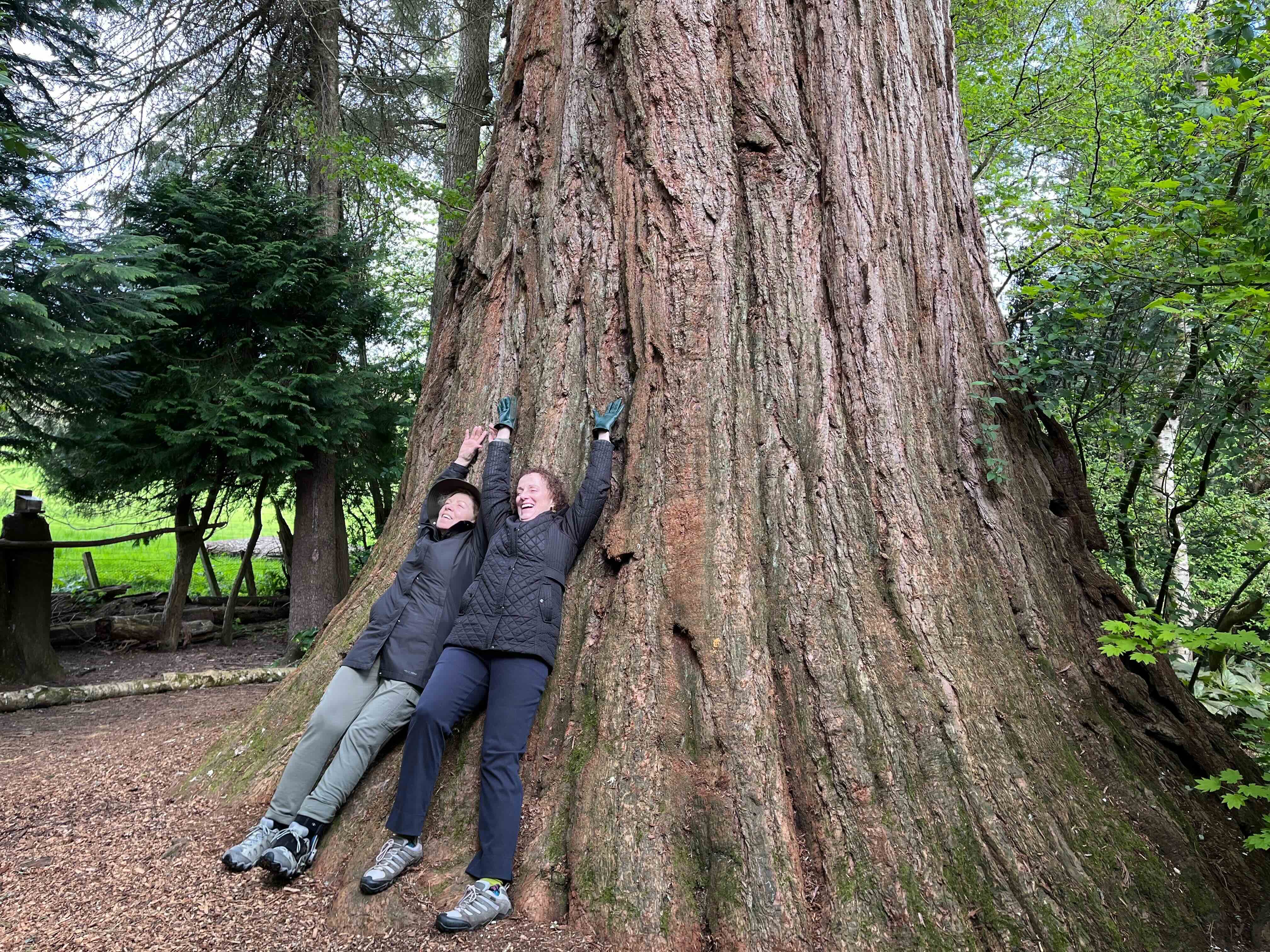
We traveled next to Cluny House Gardens, near Aberfeldy, a peaceful woodland garden featuring trees and shrubs from around the world, including a 130-year old giant Wellingtonia (Sequoiadendron giganteum). We were too early to see the giant Himalayan Lilies (Cardiocrinum giganteum) bloom, but the large stalks of last year’s blooms were plentiful.
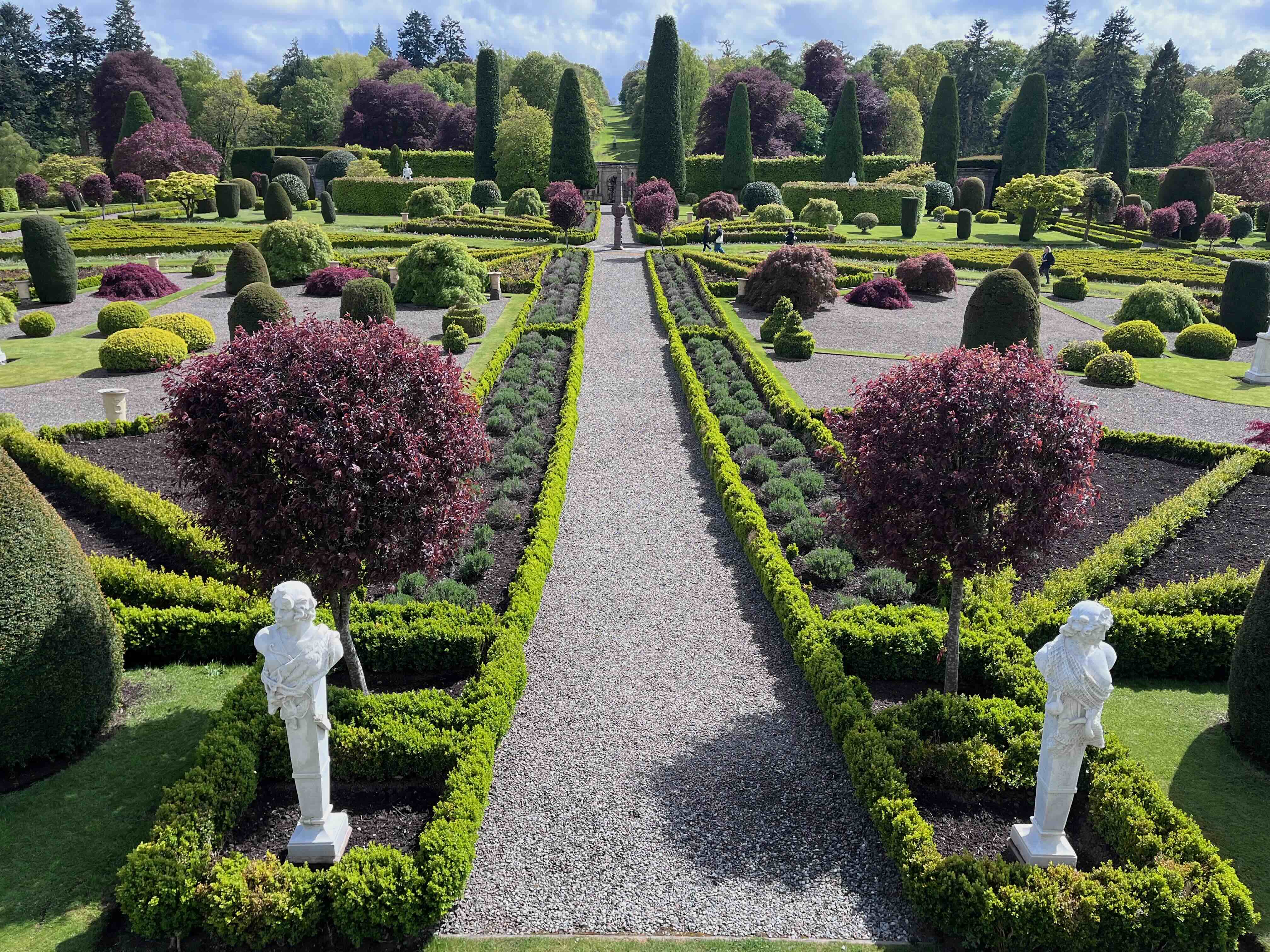 And then, on to see another castle. The formal gardens of Drummond Castle were unlike anything else we’d seen so far in our travels. First laid out in the 17th century, what exists now is a reimagining of the clipped hedges and parterres And then, on to see another castle. The formal gardens of Drummond Castle were unlike anything else we’d seen so far in our travels. First laid out in the 17th century, what exists now is a reimagining of the clipped hedges and parterres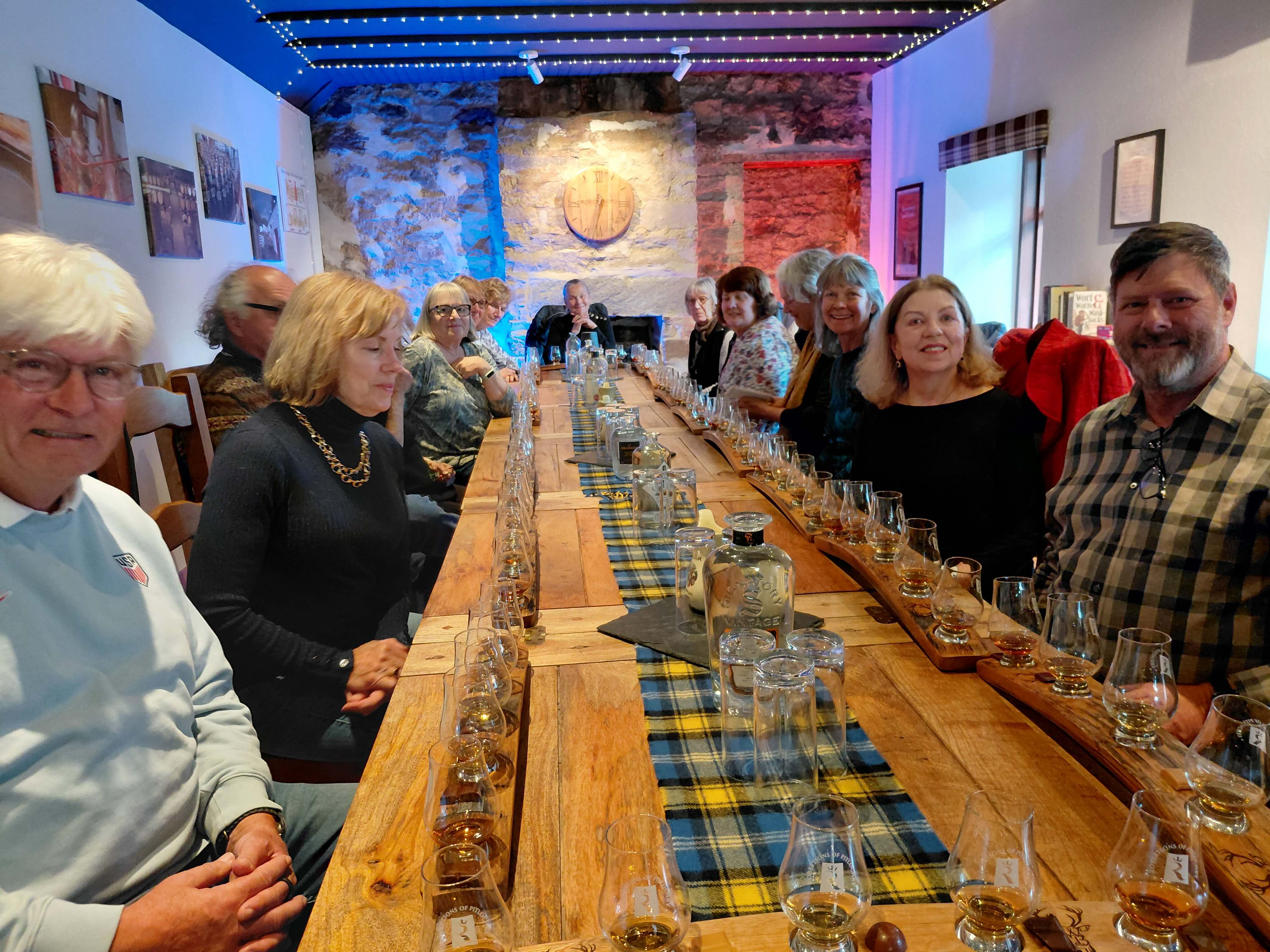 that Queen Victoria described as “really very fine, with terraces, like an old French garden.” that Queen Victoria described as “really very fine, with terraces, like an old French garden.”
An evening whiskey and chocolate tasting rounded out the day. Five handmade artisan chocolates and five very distinctive scotch whiskies—what could be better?
We stopped at Elizabeth McGregor’s impeccably maintained garden and nursery on our way through the strikingly beautiful countryside to Scotland’s south-western tip. The climate along the western and southwestern coasts is almost subtropical, due to the warming influence of the Gulf Stream, and the gardens reflect this. We arrived in Dumfries in time for dinner.
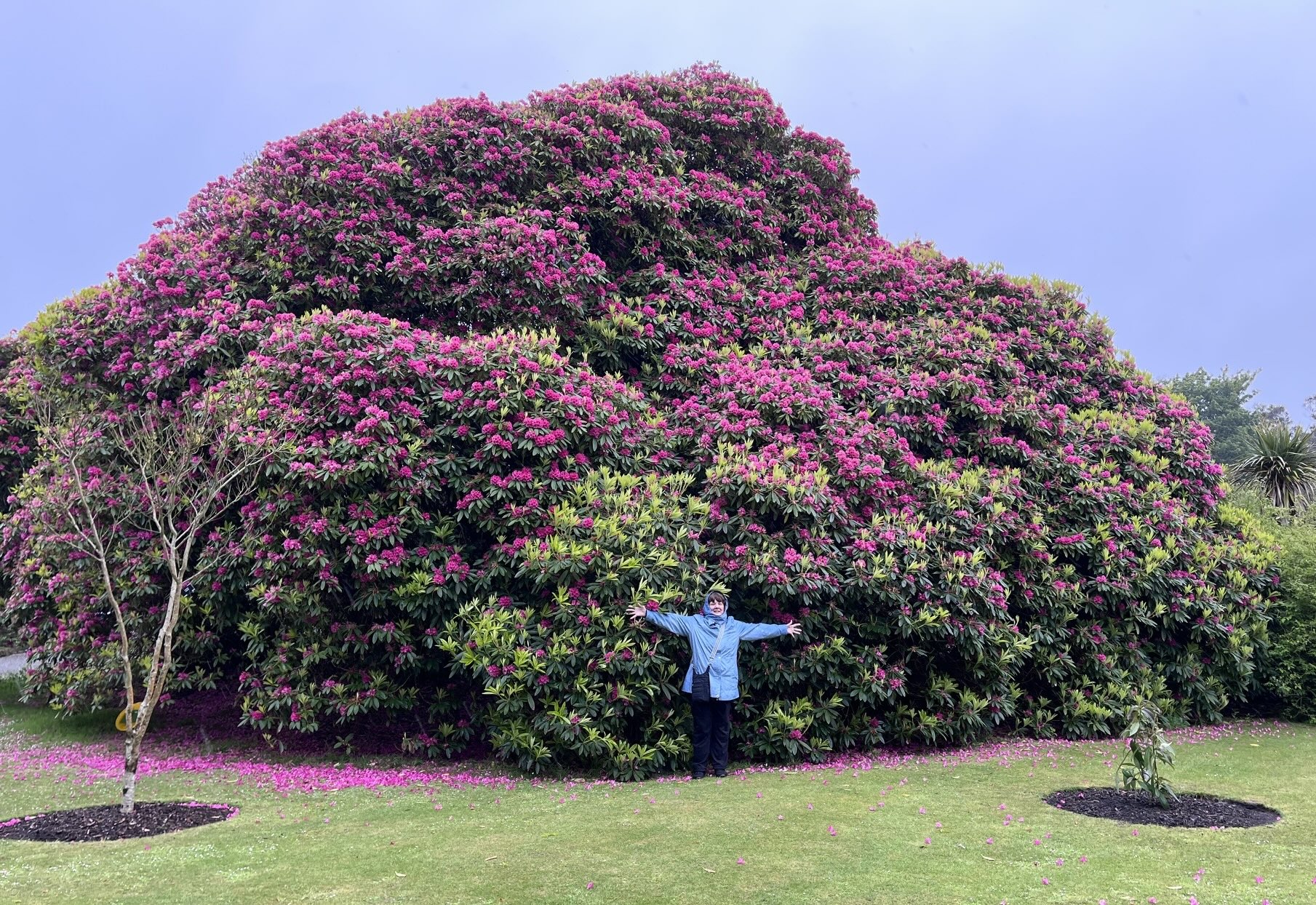 Logan Botanic Garden, with its spectacular Gunnera (Gunnera manicata) from Brazil, Echium species from the Atlantic islands, tree ferns (Dicksonia antarctica) from Australia, filo pastry trees (Polyepsis australis) from Argentina, and the amazing Rhododendron ‘Russellianum’, by far the largest of the many rhododendrons we’d seen on the trip, left a lasting impression. Logan Botanic Garden, with its spectacular Gunnera (Gunnera manicata) from Brazil, Echium species from the Atlantic islands, tree ferns (Dicksonia antarctica) from Australia, filo pastry trees (Polyepsis australis) from Argentina, and the amazing Rhododendron ‘Russellianum’, by far the largest of the many rhododendrons we’d seen on the trip, left a lasting impression.
Glenwhan Gardens was our next stop. The meandering Tree Trail offers spectacular views, and a Garden Walk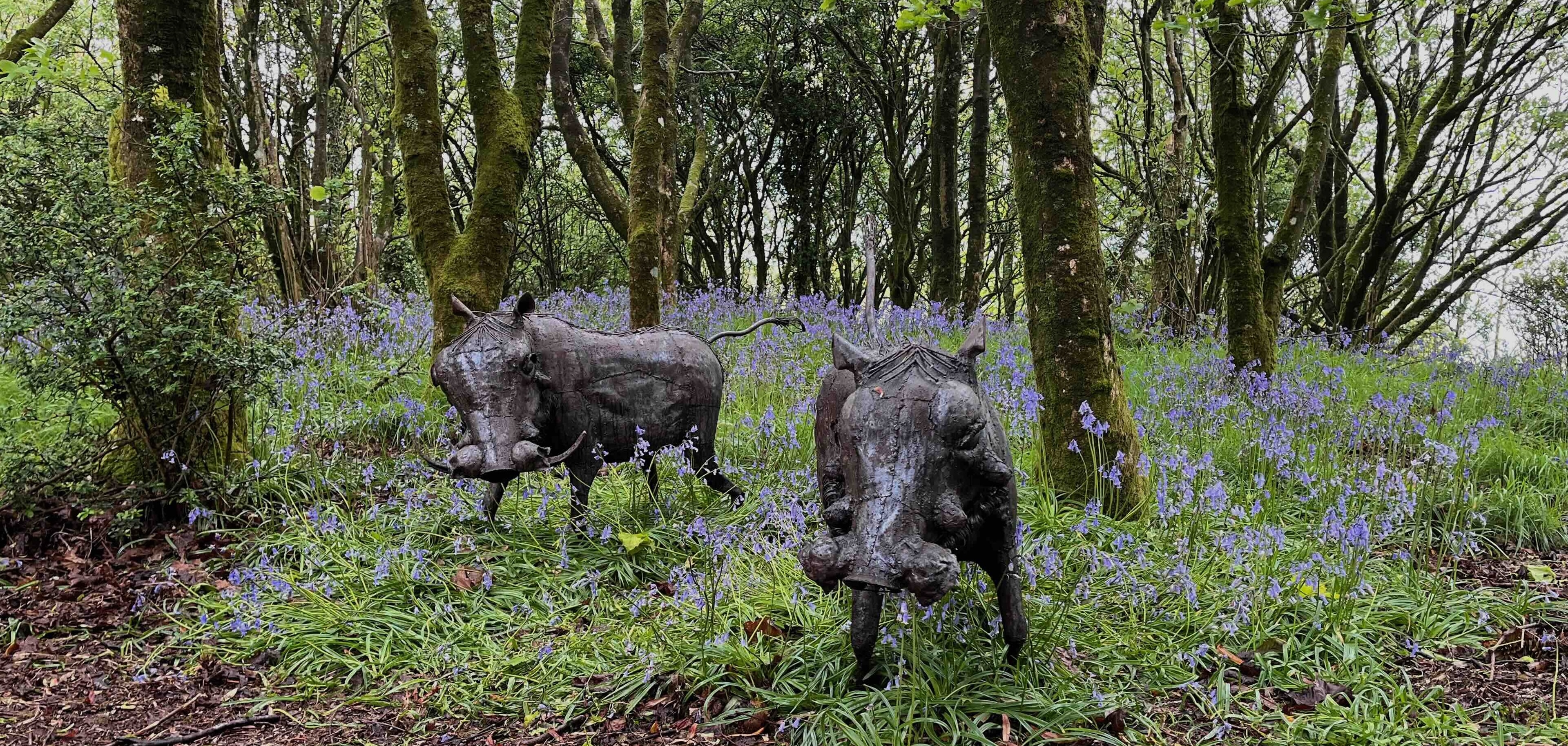 winds throughout the herbaceous plantings, wetlands, and rock gardens. Up above is a 17-acre Moorland walk, less formal and beautifully populated with bluebells (Hyacinthoides non-scripta), gorse (Ulex sp.), grasses, and ferns. winds throughout the herbaceous plantings, wetlands, and rock gardens. Up above is a 17-acre Moorland walk, less formal and beautifully populated with bluebells (Hyacinthoides non-scripta), gorse (Ulex sp.), grasses, and ferns.
Dinner that night was particularly memorable – a carefully curated tasting, featuring 8 delicate choices, at the historic Globe Inn in Dumfries.
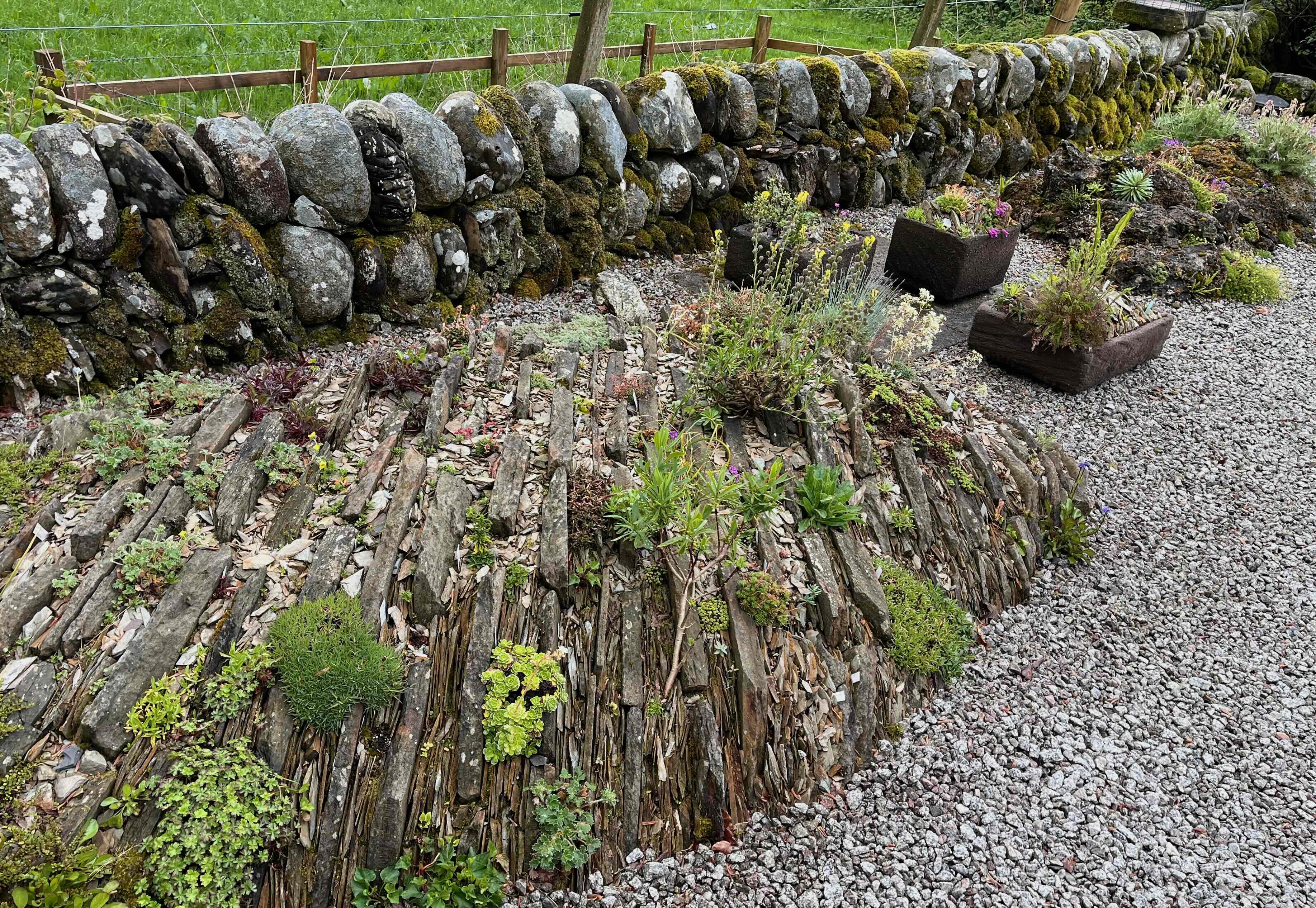 Our final day of garden visiting began with a stop at the small private garden of past presidents of the Scottish Rock Garden Club. Ian Bainbridge explained his processes of developing gravel and crevice gardens that mimic the terrain of alpine cliffs, and fashioning convincingly stone-like troughs out of Styrofoam! And, naturally, the owner baked for us. Our final day of garden visiting began with a stop at the small private garden of past presidents of the Scottish Rock Garden Club. Ian Bainbridge explained his processes of developing gravel and crevice gardens that mimic the terrain of alpine cliffs, and fashioning convincingly stone-like troughs out of Styrofoam! And, naturally, the owner baked for us.
We then traveled to Dumfries House, near Cumnock. Its stunning interiors contain a large collection of furniture by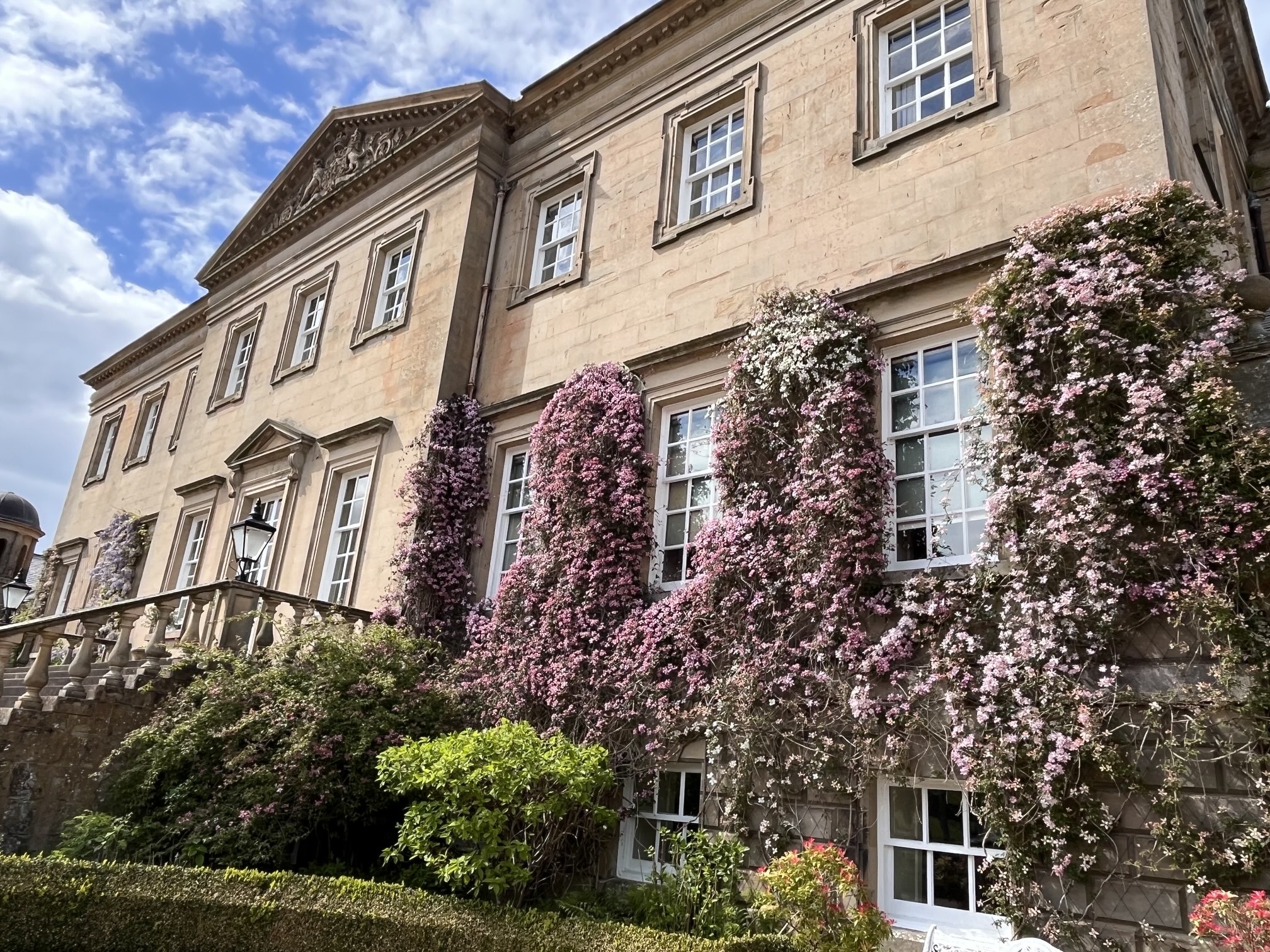 Thomas Chippendale, and the landscape features the Queen Elizabeth Walled Garden, a yew hedge maze, and lovely wooded walks. In 2007, the property was purchased by a consortium headed by Charles, Prince of Wales, and it is managed by a trust. The King’s Foundation now employs a large staff—it is the second largest employer in the region—including horticulturists Thomas Chippendale, and the landscape features the Queen Elizabeth Walled Garden, a yew hedge maze, and lovely wooded walks. In 2007, the property was purchased by a consortium headed by Charles, Prince of Wales, and it is managed by a trust. The King’s Foundation now employs a large staff—it is the second largest employer in the region—including horticulturists 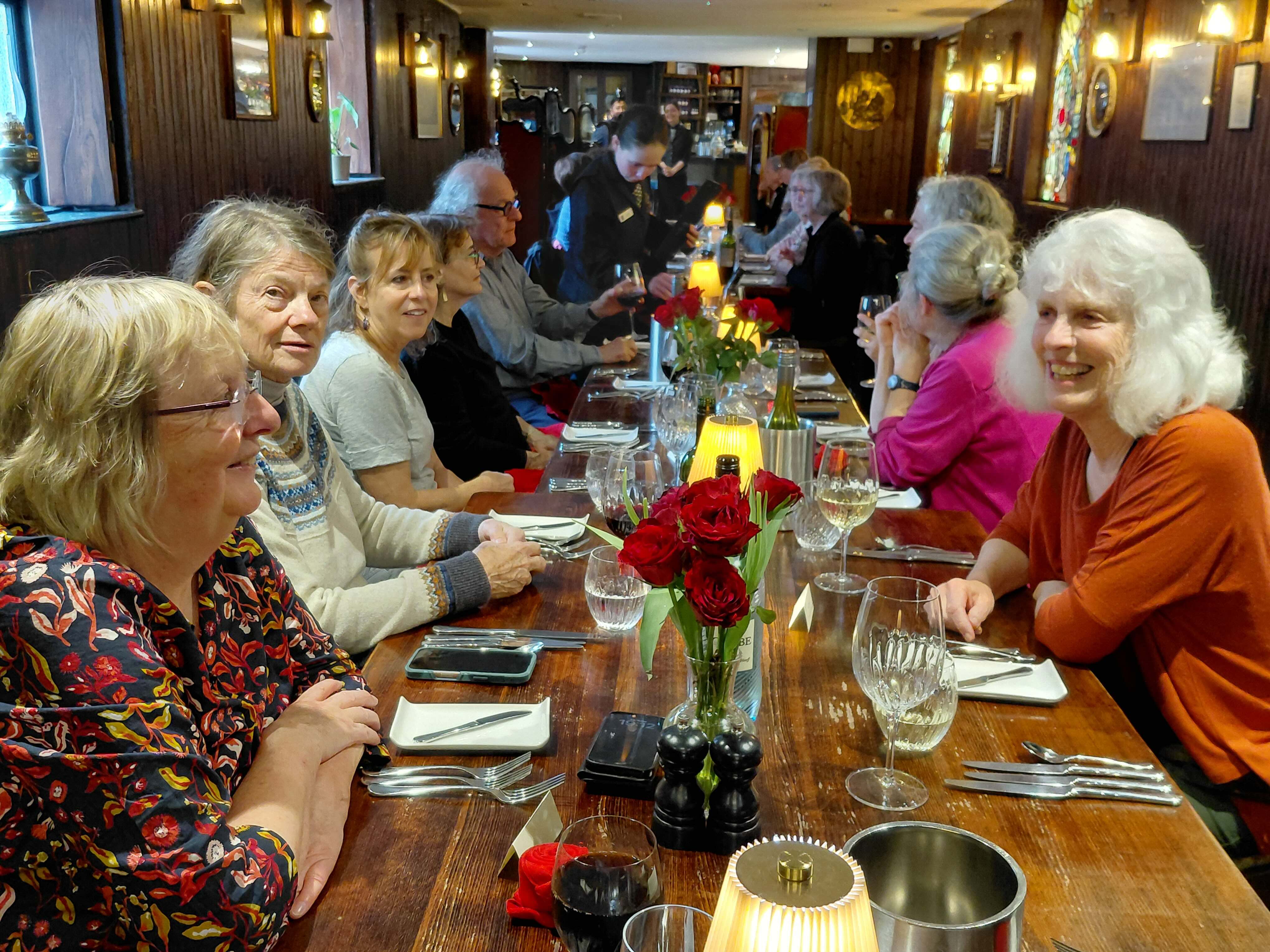 and hospitality workers, and has provided training in traditional skills and outdoor education for almost 100,000 students. and hospitality workers, and has provided training in traditional skills and outdoor education for almost 100,000 students.
Our final dinner together was at the Norton House, located a short distance from the airport.
|